


Iran’s Parliament convened a closed-door session on Tuesday with the participation of Major General Seyed Abdolrahim Mousavi, Chief of Staff of the Armed Forces, and Seyed Abbas Araghchi, Minister of Foreign Affairs, to examine the latest developments in foreign policy, nuclear negotiations, and issues related to defense and Iran’s national security.
Speaking to reporters, Abbas Goudarzi, spokesperson for the Parliament’s Presiding Board, said the joint presence of the Armed Forces Chief of Staff and the Foreign Minister conveyed a clear message that diplomacy and the defense field in the Islamic Republic of Iran operate in full coordination, coherence, and complementarity.
According to Goudarzi, lawmakers and officials emphasized that diplomacy and defense are not separate tracks but represent a unified national capacity serving the interests of Iran and its people.
During the session, the head of the Parliament’s National Security and Foreign Policy Commission and several lawmakers shared their views, warning against the repetition of past experiences and stressing that the negotiating delegation must remain vigilant, particularly in light of previous events.
Lawmakers underlined that the United States has a documented record of breaches of commitments and deceptive practices, noting that such experiences must be taken into account in decision-making and throughout the negotiation process. They stressed that negotiations must be conducted from a position of strength and authority, with the preservation of Iran’s nuclear industry described as a non-negotiable red line.
Referring to the remarks made by Foreign Minister Araghchi and Major General Mousavi, Goudarzi said that it was emphasized during the session that the Islamic Republic of Iran will under no circumstances accept zero-percent uranium enrichment, describing enrichment as a right tied to the future generations of the country. It was also stated that the location and framework of the Friday negotiations in Oman were determined entirely by Iran, reflecting the country’s diplomatic authority.
The spokesperson noted that Major General Mousavi addressed the recent 12-day war, describing it as the result of a 20-year planning effort that was ultimately thwarted by the Iranian people and the Armed Forces, rendering enemy calculations ineffective.
A report on Iran’s defense readiness was also presented, stating that the country’s preparedness is aligned with confronting hybrid and multi-dimensional warfare. According to the report, Iran’s defensive capabilities have increased significantly in both quantitative and qualitative terms.
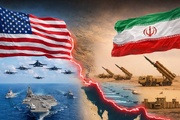
Officials further highlighted Iran’s offensive and defensive capacities, noting that during the 12-day war, Iranian missiles successfully penetrated the Israeli regime’s multi-layered air defense systems, and that current capabilities exceed those of that period.
National unity was described as a central pillar of Iran’s strength, with participants emphasizing the need to safeguard social cohesion and avoid actions that could undermine national security.
Regarding nuclear negotiations with the United States, Goudarzi said it was reiterated that talks are being conducted indirectly at Iran’s proposal, though brief encounters between negotiating teams may occur.
He added that officials stressed Iran does not seek to secure an agreement without considering the costs, and that dignity and national interests remain the top priority. It was also emphasized that the country’s military and economic affairs must not be tied to the outcome of negotiations.
Parliament Speaker Mohammad Bagher Ghalibaf stated that diplomacy today constitutes a form of struggle, adding that Iran will not compromise on its principles, including nuclear enrichment and missile capabilities.
Foreign Minister Araghchi reaffirmed that any outcome or agreement will fully comply with the laws and resolutions of the Iranian Parliament and emphasized continued focus on economic diplomacy, particularly with neighboring countries.
The session concluded with a reaffirmation that negotiations under threat are unacceptable.
MNA/6743555




Your Comment